
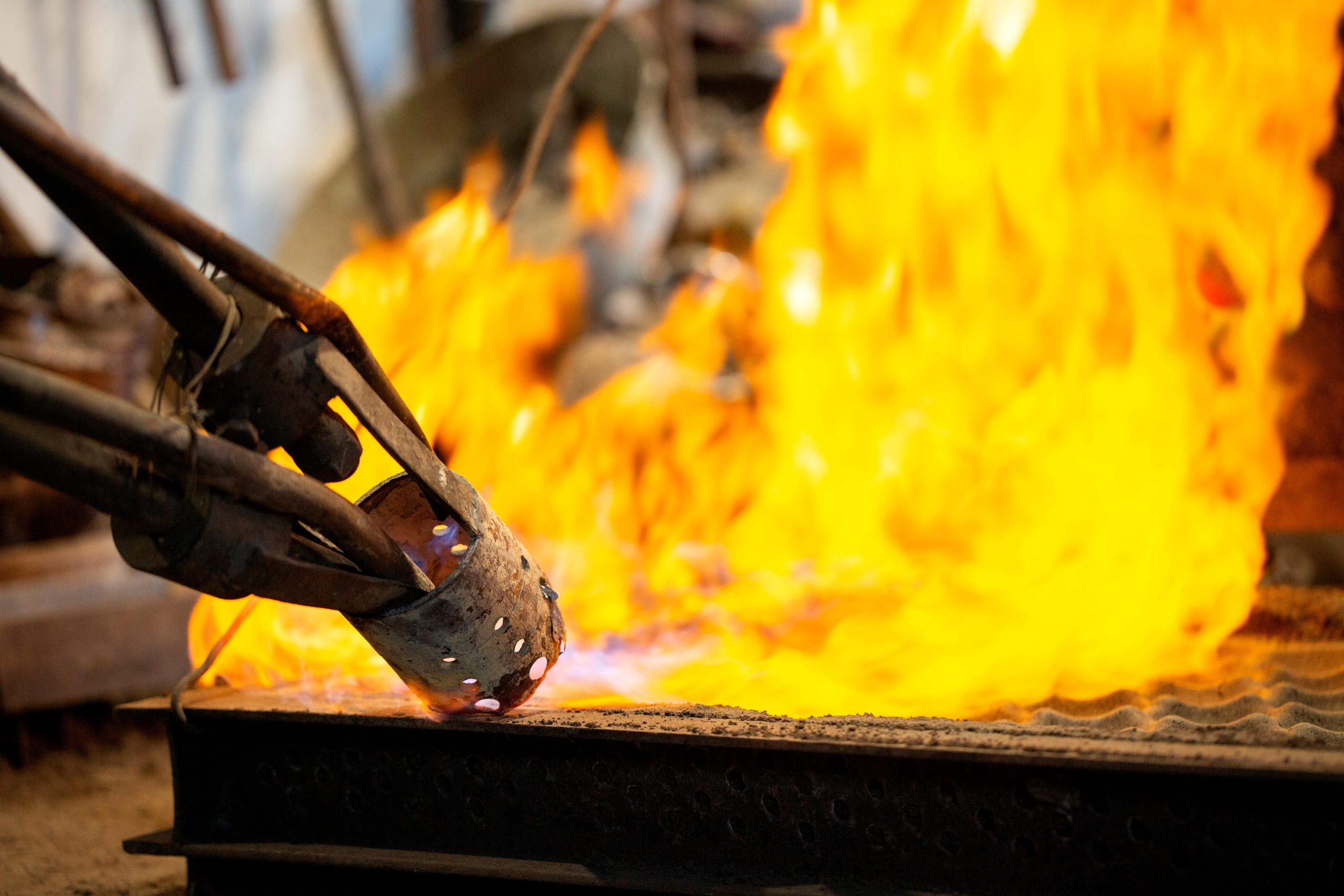
Industrial gas burners are a core component in many Malaysian manufacturing industries, including food processing, rubber and plastic production, metal fabrication, ceramics, and boiler systems. Although they appear to be simple heating devices, the wrong burner selection can result in unstable combustion, inconsistent product quality, excessive gas consumption, and unnecessary safety risks.
This guide explains the major factors Malaysian manufacturers should consider when selecting industrial gas burners, helping buyers make informed, long-term decisions rather than short-term purchases.
Understanding Your Process Heat Requirement
Every production line has its own thermal behaviour. Some processes require rapid heating to reach working temperature quickly, while others prioritise stable temperature holding across long production cycles. For example, food ovens depend on consistent low-flame modulation to avoid uneven cooking, whereas heat treatment furnaces require intense heat with strong flame stability.
Before choosing any burner, engineers must evaluate the actual heating profile of the system. This includes required operating temperature, heating duration, sensitivity of materials to temperature fluctuation, and whether the process is continuous or batch-based. Without this information, it is impossible to match a burner to the real needs of the operation.
Gas Type & Supply Conditions in Malaysia
Most Malaysian industrial plants operate using either Natural Gas (NG) or Liquefied Petroleum Gas (LPG). These two gases differ significantly in combustion behaviour and pressure characteristics, and burners must be designed to match the exact fuel source.
Key points manufacturers should evaluate include:
- Whether the facility uses NG pipeline supply or LPG tank system
- Average gas inlet pressure and expected fluctuations
- Gas quality consistency over time
- Location-specific supply reliability
Using an incompatible burner for the available gas source leads to poor combustion efficiency, unstable flame output, and increased safety hazards.
Capacity Sizing & Flame Modulation Performance
One of the most common mistakes in burner procurement is oversizing. Many buyers assume that higher capacity always means better performance, but this approach creates serious operational inefficiencies.
Correct burner sizing ensures that the burner can meet peak heat demand while maintaining smooth modulation at lower loads. Burners with wide turndown ratios are particularly useful in Malaysian factories that experience changing production volumes, as they maintain stable flame output even when operating far below maximum capacity.
Safety & Compliance Requirements
Industrial gas burners operate in high-risk environments and must be equipped with proper safety systems. The table below summarises essential safety components and their functions.
| Safety Component | Purpose |
| Flame detection sensor | Detects flame failure immediately |
| Gas shut-off solenoid valve | Stops gas flow during fault conditions |
| Ignition sequence controller | Ensures correct ignition procedure |
| Emergency interlock system | Prevents uncontrolled gas release |
These systems protect workers, equipment, and surrounding facilities from potential fire or explosion hazards. Selecting burners without verified safety components exposes the factory to unacceptable risk.
Long-Term Operating Cost & Efficiency
The true cost of a gas burner is not its purchase price but its lifecycle performance. Burners that consume excessive gas, require frequent maintenance, or suffer from poor durability ultimately cost far more than initially expected.
Factors that influence long-term cost include fuel efficiency, ease of maintenance, spare-part availability, and overall build quality. A slightly higher upfront investment often delivers lower monthly fuel bills, reduced downtime, and a longer operational lifespan.
Importance of Local Technical Support in Malaysia
Industrial burners are not plug-and-play devices. They require precise installation, commissioning, and periodic tuning to operate at peak efficiency. Malaysian manufacturers should always prioritise suppliers that provide local technical assistance, as overseas-only support leads to prolonged downtime and expensive delays.
Reliable local support allows for:
- Correct burner sizing recommendations
- On-site installation and commissioning
- Combustion tuning according to site conditions
- Quick response to breakdowns or performance issues
Conclusion
Choosing the right industrial gas burner is a critical engineering decision that impacts operational efficiency, product quality, safety, and long-term costs. By carefully evaluating process requirements, gas compatibility, capacity sizing, safety features, and overall efficiency, Malaysian manufacturers can ensure reliable, high-performance heating systems that support sustained production and operational excellence.
For manufacturers seeking burners designed for optimal performance and supported by local technical expertise, explore Unimech’s industrial gas burner solutions.
Also Read:
Disclaimer
We hope you find this article helpful and informative. The content provided here is for general informational purposes only and should not be taken as professional advice, nor does it necessarily reflect the full range of services offered by Unimech International Sdn. Bhd.
For tailored solutions, please consult with a qualified professional or contact us directly. While we make every effort to ensure accuracy and completeness, Unimech International Sdn. Bhd. makes no guarantees and accepts no liability for errors or omissions.